Learning Projects
These are projects where the goal was to learn a lot about an area of interest as quickly as possible. Each was launched to inform the scope of a product or program design project in the future.
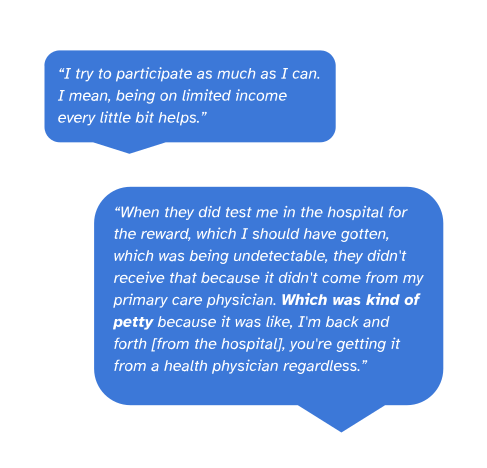
How do clients feel about rewards funded by insurers?
We had no experience in this space, so I set out to talk to people who get their health insurance through Medicaid.
| Approach |
| → Talked to five people from urban and rural settings (30 minutes each). |
| → 4 of 5 had participated in a rewards program in the last five years. |
| Findings |
| → All found rewards motivating. |
| → How the rewards program was designed and executed (UI/UX/ops) had direct impact on attitudes toward their insurer – positive and negative. |
| Impact |
| → Designed a proof of concept program + simple program administration tool. |
| → Program and tool will be rolled out in 2025. |
How do people navigate healthcare using assistive technology?
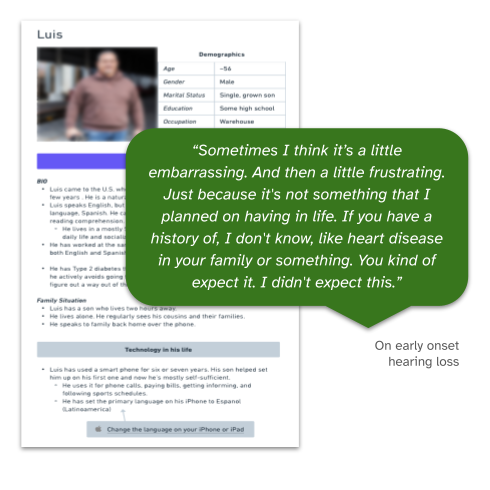
Many Medicaid members rely on assistive technology to access digital resources. What challenges do they face when engaging with health-related digital resources.
| Approach |
| → Talked to eight people who use assistive tech to mitigate challenges caused by disabilities. |
| Decisions |
| → Modified recruiting screener to target consistent users. |
| Outcomes |
| → Work dramatically grew the organization's understanding of the need to design for accessibility and inclusion throughout a client's experience. |
| → Developed three personas for different assistive tech tools. |
| Impact |
| → Accessibility requirements are now "baked in" to the design system for client-facing digital tools. |
| → They're also baked into standard internal facing digital tools. |
Read the blog post my colleague and I wrote on this work here.
Facing unexpected life crises
Where do people turn when they face a resource-related crisis? For example, a couple faces eviction? A large, unexpected medical bill arrives?
We realized that if we wanted a client to trust our communications and digital tools, we needed to investigate.
| Approach |
| → Spoke to people who had experienced a financially disruptive “shock” in the last five years. |
| → Discussed how they navigated it and their relationship to technology. |
| Findings |
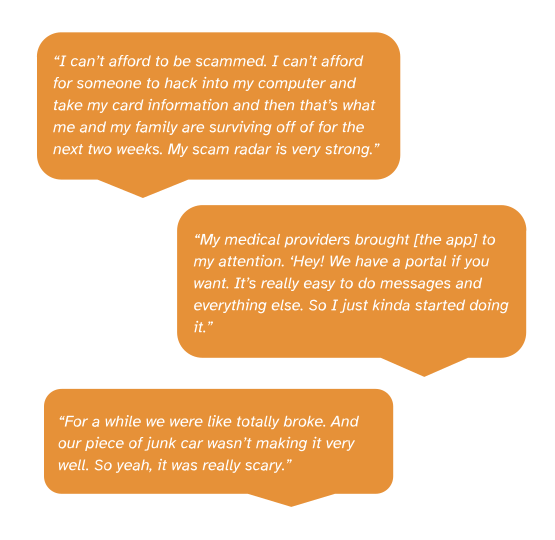
| → People are acutely afraid of scams. Some are vigilant. |
| → People can be under extreme stress, which impacts their capacity to think clearly. |
| → People used the word “serendipity” when describing where they found help. (We believe those places had made extra effort to be able to be found!) |
| → Providers can play a role in getting some to adopt new technology. |
| Impact |
| → Now a research-backed mandate to make our client-facing technology and communications feel trustworthy. |
| → Quality communication and UX is good care. |
How do our clients experience a social resource navigation and coaching program?
Understanding clients' experiences engaged in our social resource navigation and coaching program was a first step toward improving it wherever possible and addressing issues.
The clients I interviewed had been in the program for at least 4 to 6 weeks, so had time to establish relationships with their Community Health Workers (CHWs). In the interviews I got them to talk about those relationships, the specific impacts those relationships had as they pursued their goals, and how their use of technologies - phone, voicemail, SMS, an app - influenced those relationships (in direction and amplitude).
The insights from these interviews informed proposed changes to the program's foundational care model. They also provided direction for future product development within the mobile app.
What is it like to work as a Community Health Worker?
Community Health Worker (CHWs) have made important contributions to patient health, education, and general well being for decades. Yet the role be misunderstood and underrecognized by the healthcare establishment. Turnover in the role tends to be very high: approaching X% year over year.
We set out to understand individuals' experience of the role, including what drew them to it, their frustrations doing the work, and what would keep them in the role longer.
What What are the design principles of an effective, SMS-first client communication program?
Early in development of the care model we wanted to understand best practices for designing an SMS-first (only) communication program to improve client engagement, facilitate practical education and, support behavior change.
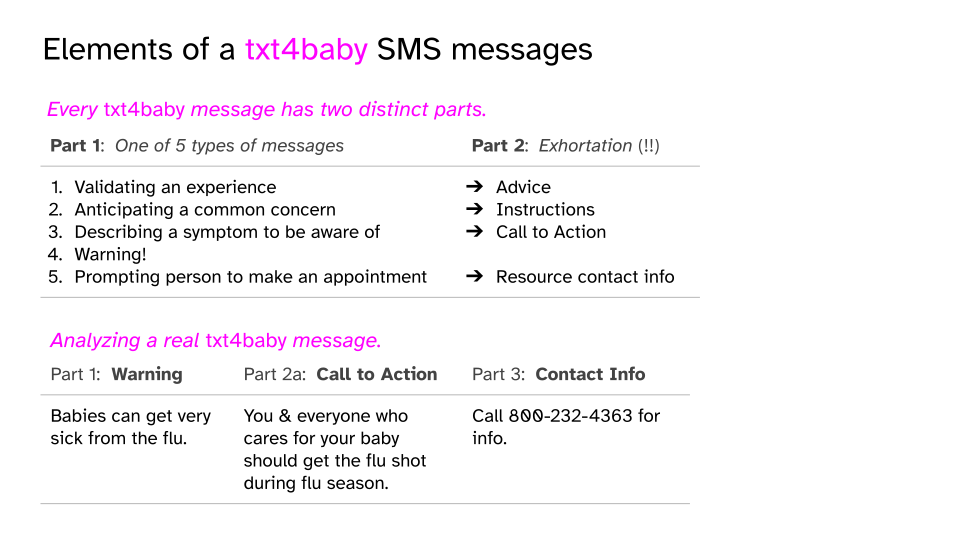
- I analyzed the programming structure and message construction of the SMS-based education and support program for expecting and new mothers: txt4baby.org
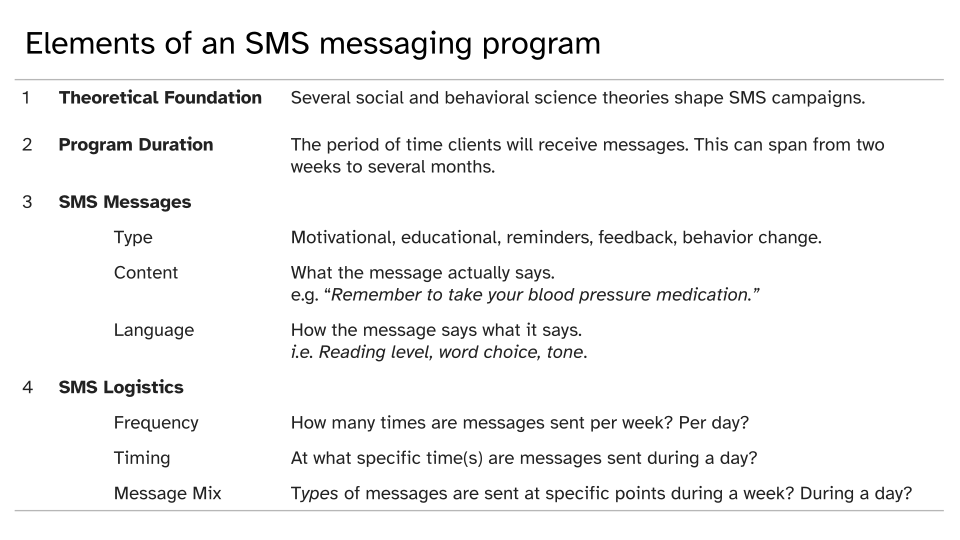
- Desk research, including public health and communications literature review, showed four major elements define a program's shape, character, and user experience.